Crete - Beyond the Beaches NEW
Crete is not only a summer destination. Beneath the famous beaches and the ancient ruins lies a mountain world of extraordinary scale and wildness — limestone peaks rising above 2,400 metres, gorges cut down to the sea over millennia, and palm forests where the rivers meet the Libyan coast. This seven-day trekking programme opens up that Crete - and it does so in October, the best month of the year for it: the summer heat has broken, the crowds have gone, the light is golden and soft, and the sea is still warm enough to swim in. And while the focus is on the mountains, the programme takes in some of the island's most famous beaches too.
Price Includes / Excludes
Price Includes
- Complete organization and coordination of the program
Tour Itinerary
Our Cretan adventure starts the moment you land. A direct flight from Sofia brings us to Chania in just 90 minutes - one of the loveliest towns in southern Greece and your first taste of the island. We land in the late afternoon. Check in, dinner at a traditional taverna, and a briefing for the day ahead.
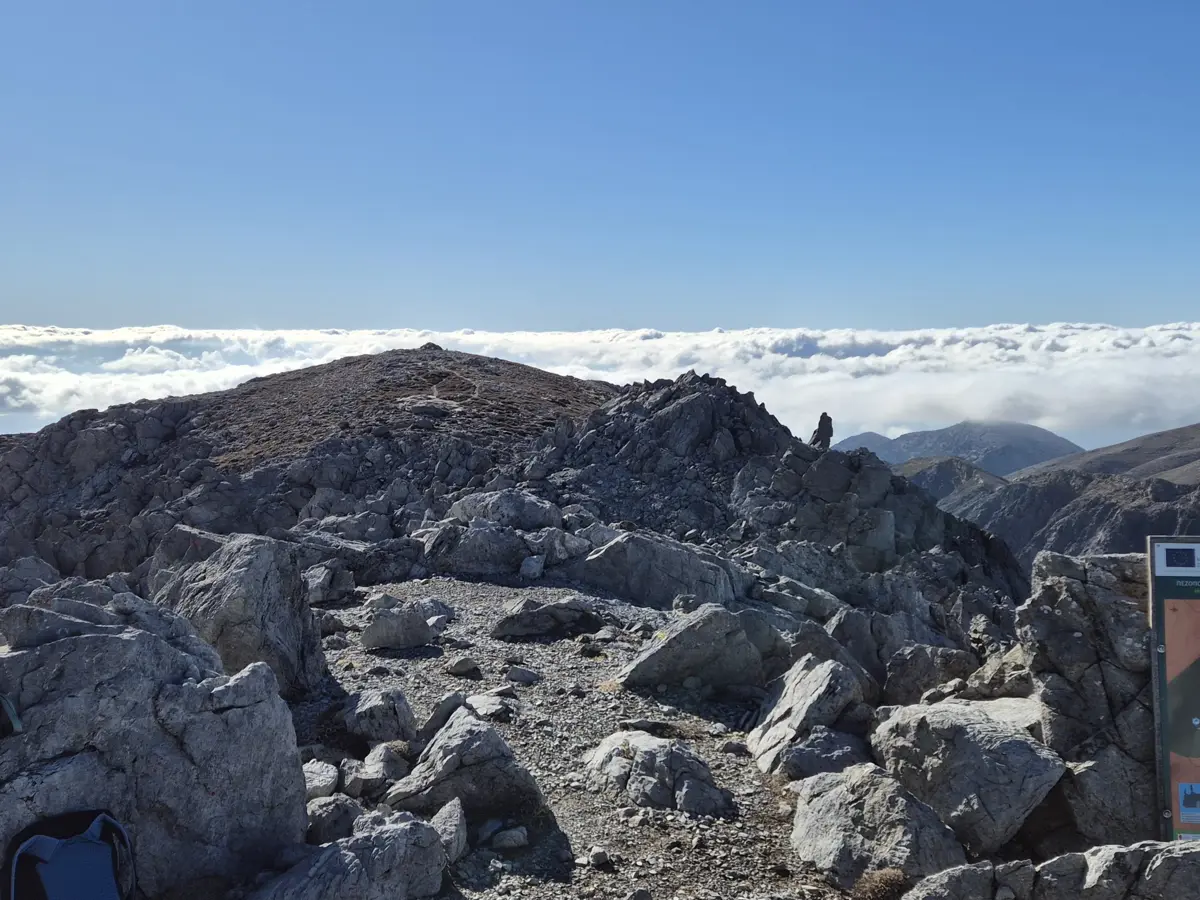
Stand in the Xyloskalo car park and look up. That sheer limestone wall dominating the sky above the mouth of the gorge is Gigilos - and today you will be standing on top of it. The path climbs steeply through old, leaning cypresses and stony switchbacks to the Linoseli saddle at 1,700 m, where the entire massif of the White Mountains suddenly opens out in one astonishing sweep. From the saddle a short but exhilarating scramble on solid rock leads to the summit. The reward is complete: Chania and the Aegean glittering far to the north, the deep blue of the Libyan Sea and the distant island of Gavdos to the south, and the great chasm of the Samaria gorge 1,200 metres directly beneath your feet. Tonight you go to sleep knowing that tomorrow you walk down into it.
The same starting point as yesterday - but this time we go down. The Samaria gorge is one of the great mountain walks of Europe: 16 kilometres through a UNESCO biosphere reserve, carved into the heart of the White Mountains by the river Tarraios over millions of years. We set off above the treeline in cool mountain air and spend the next six hours working our way deeper into the earth. The walls rise as high as 300 m. October is the best month for this walk: golden, gentle light, the maples turning colour, wild goats appearing now and then on the rock, and the summer crowds long gone. The trek ends in the small fishing village of Agia Roumeli on the Libyan Sea.
After two demanding days in the mountains, this is the day we catch our breath. We head for two of the most celebrated beaches on Crete - Balos and Elafonisi. Balos is remarkable for its shallow turquoise lagoon and white sand, where the sea shifts through dozens of shades of blue and green and the view towards the Gramvousa peninsula lends the whole scene an almost unreal quality. Elafonisi, for its part, is famous for the fine pink cast of its sand and for water that is crystal clear, shallow and warm - ideal for a long, unhurried spell by the sea. A day for rest, for sun, and for taking the island slowly.
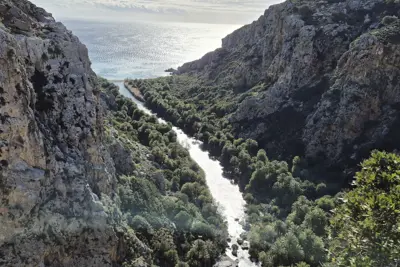
Nothing quite prepares you for Preveli. The Kourtaliotiko gorge cuts south through dramatic 300-metre limestone walls; the river drops in waterfalls and gathers in turquoise pools before reaching the only beach of its kind in all of Europe. We follow the Megalopotamos river through the forest — wading shallow fords, ducking under overhanging rock, walking in the shade of oleanders and ancient plane trees - until the canyon walls draw apart and we step out onto a beach ringed by hundreds of wild date palms, their reflections trembling in the river lagoon metres from the open sea. We will swim in the river. We will swim in the Libyan Sea as well. On the way back we visit the ancient monastery of Preveli, set on a rocky headland above the shore — one of the most significant religious and historical sites on Crete.
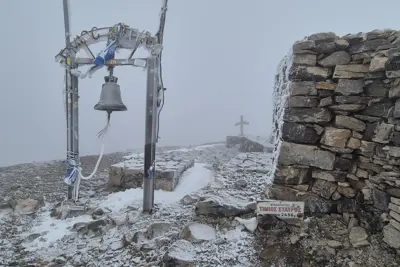
This is the day the whole programme has been building towards. Psiloritis - known also as Mount Ida and as Timios Stavros - is the highest point on Crete at 2,456 m, and a UNESCO geopark. The drive up to the Nida plateau at 1,500 m is remarkable in its own right: a vast treeless basin ringed by summits, silent and very nearly lunar.
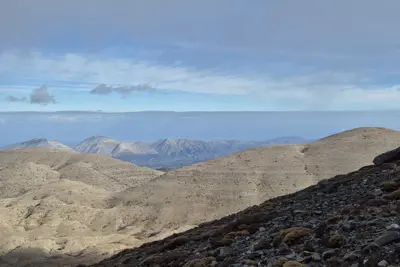
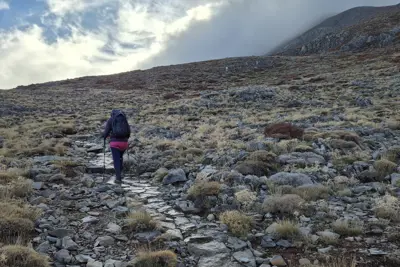
We follow a well-waymarked path to the main ridge and then along it, through steadily wilder and windier ground, to the little stone chapel on the summit itself. On a clear October morning we see both coasts of Crete at once - the island laid out in every direction below us like a relief map. This is a summit that stays with you for good.
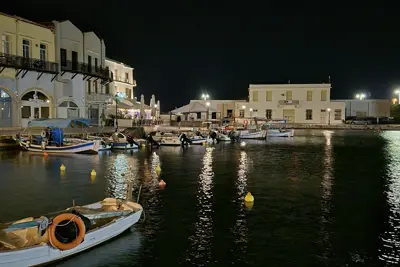
We walk the Rethymno waterfront once more in the early light, when the old town is quiet and the fishing boats have just gone out. We find a last table in the shade for a strong coffee and let the week's conversations run as long as they want to. Then the transfer to Chania airport for the flight home to Sofia. We leave with tired legs, a full map, and a very clear sense of what Crete is underneath it all: a wild, proud, ancient island where the mountains rise straight out of the sea.
Required Documents !
- Valid Bulgarian ID
Important:
Three seasons trekking equipment
Shoes
Suitable shoes for the mountain, according to the weather forecast. High ankle or low shoes. You may wear sneakers to change into at the end of the program
Spare socks
Lighting
Headlamp - An absolute must-have accessory for every mountaineer. It may be necessary for the group to start a trek very early or finish the trek in the dark (force majeure). In these situations, each participant must have a headlamp. We recommend going with a proven brand like Petzl or BlackDiamond
Spare batteries
Backpack
About 40 liters backpack - Quite enough for one or two day hikes.
Backpack cover - in case of rain
Clothing top
Depending on the season and weather conditions
T-shirt or thin thermal base layer - from merino or synthetic. In no case cotton material
Fleece
A down jacket or other jacket with synthetic insulation - a thin down jacket is recommended. Evenings and mornings in the mountains, temperatures are low. No expensive down jacket needed
Wind and water proof jacket
Thin hat and gloves
Buff
Clothing bottom
Depending on the season and weather conditions
Comfortable long pants - in the perfect case with zippers for ventilation
Sun protection
Sunglasses
Summer hat
Sun cream with high protection
Buff with UPF protection
Rain protection
Raincoat
-or-
Waterproof top and bottom
Water and food
Water (1.5 liters)
Food for the trek
Money and documents
Money
ID or passport
Other
First aid kit
Trekking poles
Cancellation Policy:
Чл. 89. (Изм. – ДВ, бр. 37 от 2018 г., в сила от 01.07.2018 г.) (1) Пътуващият има право да прекрати договора за туристически пакет по всяко време преди започването на изпълнението на туристическия пакет. The tourist owes a penalty as follows: